



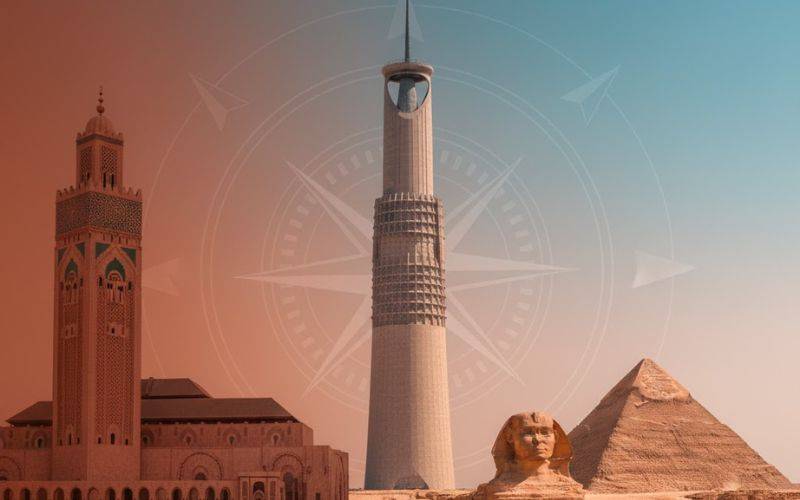
With its rich history, varied cultures, and stunning landscapes, the Middle East and North Africa (MENA) region is a thrilling place to visit. Whether you're visiting the modern charm of Bahrain, the desert splendor of Saudi Arabia, the vibrant cities of Morocco, or the ancient wonders of Egypt, one thing is for sure: knowing how to apply for an eVisa in each country is crucial to a stress-free itinerary.
This comprehensive eVisa guide will walk you through everything you need to know about applying for eVisa Morocco, Saudi Arabia, Egypt, and Bahrain. From the basics of eVisas to country-specific details, we’ll make sure you're well-prepared for your trip. Let's dive in!
Why Travelers Need a Complete eVisa Guide for the Middle East & North Africa
Knowing the requirements for visas is an essential step in the planning process for trips to the Middle East and North Africa. The MENA region is renowned for its many languages and cultures, as well as its unique travel laws. Nowadays, the majority of nations in this area provide electronic visas, or eVisas, which let visitors apply online in advance of their trip. Compared to the conventional approach of visiting embassies or consulates, this is far more convenient.
However, why is having a comprehensive eVisa guide for this area important? To begin with, there can be significant variations in the eVisa procedure between nations. While one nation might provide a straightforward online application, another might demand extra paperwork or a particular window for entry. Travelers risk delays or even denial of entry if they don't thoroughly research the requirements for an eVisa.
Having a comprehensive guide guarantees that you comprehend the procedures, helps you avoid common blunders, and, in the end, provides you with the peace of mind to concentrate on having fun while traveling.
Understanding eVisa Types in the Region
The term eVisa refers to a travel permit obtained electronically before you travel. It differs from a traditional paper visa in that you apply online, usually upload documents, and receive approval in your inbox.
In the MENA region you’ll typically find:
Single-entry eVisas (one visit, one entry)
Multi-entry or multiple-entry eVisas (enter, exit, return)
Short-stay / tourism eVisas vs longer stays or other purposes
Understanding which type applies to your route is key before booking flights or hotels.
Country-by-Country Guide: Morocco, Saudi Arabia, Egypt & Bahrain

Here’s a breakdown of how the eVisa (or electronic travel permit) works in each destination:
Morocco eVisa
Morocco's blend of history, culture, and scenic beauty makes it a popular travel destination. Travelers from a few countries can currently obtain eVisas from Morocco. You can apply online, and the procedure is rather easy.
Key Points:
Eligibility: Most nationalities can apply for a Morocco eVisa, but travelers from some countries (like the US, UK, and EU countries) may not need a visa for short stays.
Validity: Typically, the Morocco eVisa is valid for up to 30 days.
Requirements: Passport valid for at least six months, a recent passport-sized photo, and sometimes proof of accommodation and return tickets.
Saudi Arabia eVisa
The Saudi Arabia eVisa system is essential to expediting the entry process for foreign visitors to Saudi Arabia, which has just opened its doors to them. With this visa, visitors can see historical and natural landmarks like Al-Ula, the Empty Quarter desert, and the Red Sea coastline in addition to the bustling cities of Riyadh and Jeddah.
Key Points:
Eligibility: Travelers from over 50 countries, including the US, UK, and EU, are eligible for the Saudi eVisa.
Validity: The Saudi eVisa is typically valid for one year, with stays allowed up to 90 days within a 180-day period.
Requirements: Passport valid for at least six months, a digital photo, and a valid credit or debit card for payment.
Egypt eVisa
Egypt, which is home to the famous Pyramids of Giza and the historic treasures of Luxor, provides visitors from a wide range of nations with a simplified eVisa application process.
Key Points:
Eligibility: Citizens of many countries, including the US, UK, Canada, and Australia, can apply for an eVisa for Egypt.
Validity: The eVisa is typically valid for 30 days, and it’s a single-entry visa. It can be extended within Egypt if needed.
Requirements: Passport valid for at least six months, a digital photo, and sometimes additional documents like hotel bookings or an invitation letter.
Bahrain eVisa
Bahrain provides a very easy-to-use eVisa system for a wide range of nationalities. Bahrain is a must-visit location for tourists visiting the Gulf region because of its thriving culture, historic sites, and modern infrastructure.
Key Points:
Eligibility: Nationals from over 50 countries are eligible for Bahrain’s eVisa, including most Western countries and some Asian nations.
Validity: The Bahrain eVisa is usually valid for 30 days.
Requirements: Passport valid for at least six months, a digital photo, and sometimes additional supporting documents depending on the type of visa.
Middle East & North Africa eVisa Refund Policy — What Travelers Should Know
Many travellers overlook refund rules until it’s too late. With eVisas:
Once the application is complete and processed, fee refunds are rare.
If your entry is rejected or you change your travel dates, you may not get a refund.
Always save your approval, confirmation number and email just in case you need to make amendments.
Double-check cancellation or amendment terms when you apply for the eVisa, especially for the “Middle East & North Africa eVisa Guide: Morocco, Saudi Arabia, Egypt & Bahrain” context — rules differ by country.
Visa on Arrival Options in MENA Countries — Who Is Eligible?
While eVisa is highly convenient, some countries still offer visa on arrival (VOA) or entry permits at the airport / border for eligible nationalities. For example:
Egypt visa on arrival (VOA) may allow for certain passport holders, though pre-travel eVisa is advised to avoid delays.
Saudi Arabia has expanded eVisa and some VOA eligibility for nationals holding certain visas/residencies.
Travel tip: Check your nationality + travel purpose in advance. If you rely on VOA but arrive late at night, it may lead to longer wait times or complications.
Common Mistakes Travelers Make When Applying for Middle East eVisas
To make sure you breeze through your application, avoid these common errors:
Incorrect passport validity: Many countries require your passport to be valid for 6 months from arrival.
Missing travel document uploads: Not including clear scans or photos of required documents can delay approval.
Using an unsupported browser or incomplete application: Especially with the “Middle East & North Africa eVisa Guide: Morocco, Saudi Arabia, Egypt & Bahrain” in mind, ensure your device and connection are stable.
Booking flights/hotels before you get approval: While surety is helpful, apply first and then finalise bookings once you’re approved.
Ignoring entry conditions: Multi-entry vs single-entry, stay length, permissible activities — know what your eVisa covers.
Why Travelers Prefer Multi-Entry eVisas for Middle East Trips
If your trip involves more than one landing in the region (for example, travel between Bahrain and Saudi Arabia, or Saudi Arabia and Egypt), then multi-entry eVisas are ideal. Benefits include:
Flexibility to leave and return without re-applying
Better value for travellers doing loops or extended stays
Peace of mind in case your itinerary changes (e.g., adding a desert safari in Saudi Arabia and then flying to Egypt)
When you read about “Middle East & North Africa eVisa Guide: Morocco, Saudi Arabia, Egypt & Bahrain”, definitely look for multi-entry options when available.
Luxury Travel Routes: Morocco to Egypt with One Smooth eVisa Plan
Here’s a sample luxury route: Start in Morocco’s vibrant cities (Marrakesh, Fès), take in the Atlas Mountains, then fly to Egypt via Cairo or Alexandria for the Nile and Red Sea adventures. By applying for your eVisa for each country in advance, you skip major headaches. With the eVisa in hand for Morocco and Egypt, you’ll move seamlessly from one region to another and make the most of the journey across North Africa and the Middle East. Add optional stops in Bahrain or Saudi Arabia if your schedule allows — all tied into the “Middle East & North Africa eVisa Guide: Morocco, Saudi Arabia, Egypt & Bahrain” strategy.
eSIM Plans for Multiple Countries in the Middle East & North Africa
Travel tech tip: Since you’re visiting multiple destinations, look into a travel-friendly eSIM plan. These digital SIMs allow you to maintain data across countries, sometimes activating automatically on entry. Useful for:
Checking your eVisa status & arrival instructions
Using maps, ride-hailing apps, translation tools in local markets
Staying connected with family/friends about your route
Make sure your device is unlocked before you go, and research eSIM providers that cover Morocco, Saudi Arabia, Egypt & Bahrain.
Preparing for Travel in the Middle East & North Africa
A few preparatory steps help you have a smooth journey:
Check your passport validity, photo scan/jpeg format, document uploads — especially for each destination’s eVisa application.
Arrange travel insurance (some countries may ask for proof though not always mandatory).
Book your accommodation and keep the confirmation handy. Some eVisa systems ask for it.
Check currency exchange, local transport, emergency numbers and health requirements (vaccinations if necessary).
Make copies (digital + print) of your approval emails, passport bio page, travel itinerary.
Best Time of Year to Visit Morocco, Saudi Arabia, Egypt & Bahrain
Morocco: Spring (April–May) and autumn (Sept–Oct) are lovely — mild weather, fewer crowds.
Saudi Arabia: October to March is comfortable; summer can be extremely hot in desert areas.
Egypt: Late autumn to early spring (Nov–Mar) is prime — heat is gentler for exploring the Nile and temples.
Bahrain: October to April is ideal; avoid the summer heat if you plan outdoor activities.
Planning your trip using the “Middle East & North Africa eVisa Guide: Morocco, Saudi Arabia, Egypt & Bahrain” mindset means you’ll map the best season, then apply for your eVisas accordingly.
Morocco Culture & Local Experiences: Why You Need an eVisa in Advance
In Morocco, the richness lies in the contrasts: medinas, deserts, coastlines, Berber villages. Applying for your eVisa ahead of arrival is a wise move — you’ll pick your gateway city (e.g., Marrakech or Casablanca) and step into local markets and riads with confidence. The digital approval means you spend less time on formalities and more time sipping mint tea in a medina square or riding camels at sunset.
Egypt Travel Highlights: Pyramids, Red Sea & Nile
Once your Egypt eVisa is sorted, you’re free to immerse yourself in one of the world’s most iconic destinations. Visit the pyramids of Giza, cruise the Nile, dive in the Red Sea coral reefs, stroll through bustling Cairo markets. The advance eVisa means you arrive with a green light and can focus on the experience rather than the paperwork.
Marine & Desert Adventures in Egypt & Saudi Arabia
Whether you choose desert dunes in Saudi Arabia’s Empty Quarter or a Red Sea dive trip in Egypt, having your eVisa sorted gives you flexibility. For example: In Saudi Arabia you could combine coastal beach time with inland dunes, and the multi-entry eVisa lets you re-enter if you take a side-trip. For Egypt, desert safaris beyond the Nile banks become more accessible. Your “Middle East & North Africa eVisa Guide: Morocco, Saudi Arabia, Egypt & Bahrain” journey becomes about adventure, not admin.
Packing Tips for Desert, Coastal, and Urban Adventures
Light layers: desert days are hot, evenings can cool down.
Modest clothing: especially when visiting cities, cultural sites.
Sun protection: hat, sunglasses, sunscreen for Nile/Red Sea/Desert.
Swimwear for coastlines (Red Sea, Bahrain) plus cover-ups for public spaces.
Plug adapter & power bank: your eVisa email, tickets and maps will all live on your device.
Copies of your eVisa confirmation: print and digital.
Having your eVisa sorted lets you pack for the fun part — the landscapes, culture and experience.
Family Travel: Applying for Group eVisas in MENA Countries
Travelling with kids, grandparents or a group? A group-friendly strategy: apply for each applicant’s eVisa simultaneously, ensure everyone’s documents are consistent (names, passport numbers, travel date). Some countries may require separate applications per person. For Morocco, Saudi Arabia, Egypt & Bahrain, it’s wise to gather everyone’s passport and travel details ahead of submitting the application. That way your family adventure proceeds smoothly, free of last-minute hiccups.
Travel Insurance Rules for MENA Visa Applicants
Even if a country doesn’t explicitly demand travel insurance, it’s always smart to have it—especially when you’re visiting multiple MENA destinations. Peace of mind when diving in the Red Sea, or hiking in Saudi Arabia’s desert. Save your policy number, and keep a copy with you. If you face delays, disease, or need travel support, you’ll thank yourself. While you’re reading the “Middle East & North Africa eVisa Guide: Morocco, Saudi Arabia, Egypt & Bahrain”, have insurance terms alongside your itinerary.
Gulf Business Travel: Bahrain & Saudi Arabia eVisa Essentials
Quick and simple eVisa options help business travelers enter Bahrain and Saudi Arabia smoothly. Apply online, get fast approval, and enjoy hassle-free trips with the Bahrain Business eVisa. For business travellers heading to Bahrain or Saudi Arabia:
Ensure your eVisa is appropriate for business/travel as required. For Saudi Arabia the eVisa covers leisure and tourism but check if your business visit fits.
Check local customs, business norms, network etiquette ahead of time.
In Bahrain, the online eVisa list makes things faster for short business trips.
If you’ll travel between Bahrain and Saudi Arabia, think about the multi-entry benefit — the “Middle East & North Africa eVisa Guide: Morocco, Saudi Arabia, Egypt & Bahrain” applies even when business is involved.
Solo Travel Safety Guide for Morocco, Saudi Arabia, Egypt & Bahrain
If you’re travelling solo:
Share your itinerary with someone you trust.
Keep your eVisa approval email, passport scans, and emergency contacts in both digital and printed form.
Research local transport and choose reliable providers (taxi apps, ride-sharing).
In desert or remote areas, inform your hotel/guide of expected return time.
Stay aware of cultural norms—especially in more conservative regions like Saudi Arabia.
With your eVisa sorted in advance, that’s one less thing to worry about. You’re free to focus on exploring, meeting new people, and experiencing the region with confidence.
Final Thoughts
Your pass to easy travel in one of the most interesting and varied parts of the world is the "Middle East & North Africa eVisa Guide: Morocco, Saudi Arabia, Egypt & Bahrain." From Bahrain's contemporary Gulf charm to Egypt's historic wonders to Saudi Arabia's expansive landscapes, or Morocco's elaborate palaces and bazaar alleys, the eVisa application process is where you begin. Examine the requirements for each nation, apply as soon as possible, and leave feeling confident.
Ultimate Frequently Asked Questions: Middle East & North Africa eVisas
Q1: How soon should I apply for my eVisa before travel?
A: As soon as your travel dates are confirmed. Many countries recommend applying a few days ahead; some process faster if all documents are correct.
Q2: What if my itinerary changes after I get the eVisa?
A: Minor changes like flight time shifts are usually fine. But if you change country or stay much longer, check the terms of your eVisa—some are single entry or have fixed validity.
Q3: Can I travel to multiple countries with one eVisa?
A: No, each country issues its own eVisa or travel permit. Your “Middle East & North Africa eVisa Guide: Morocco, Saudi Arabia, Egypt & Bahrain” plan needs separate eVisas for each country unless otherwise stated.
Q4: Is a visa on arrival safer than an eVisa?
A: Not necessarily. An eVisa is often better because you get approval ahead of time—reducing wait times and surprises after you land.
Q5: What if I get denied entry after I hold an approved eVisa?
A: If you hold an approved eVisa, entry denial is rare but possible (e.g., insufficient documentation or other issues). Always travel with required documents, confirm arrival port details and ensure you meet all conditions
No comments yet
Be the first to share your thoughts!