



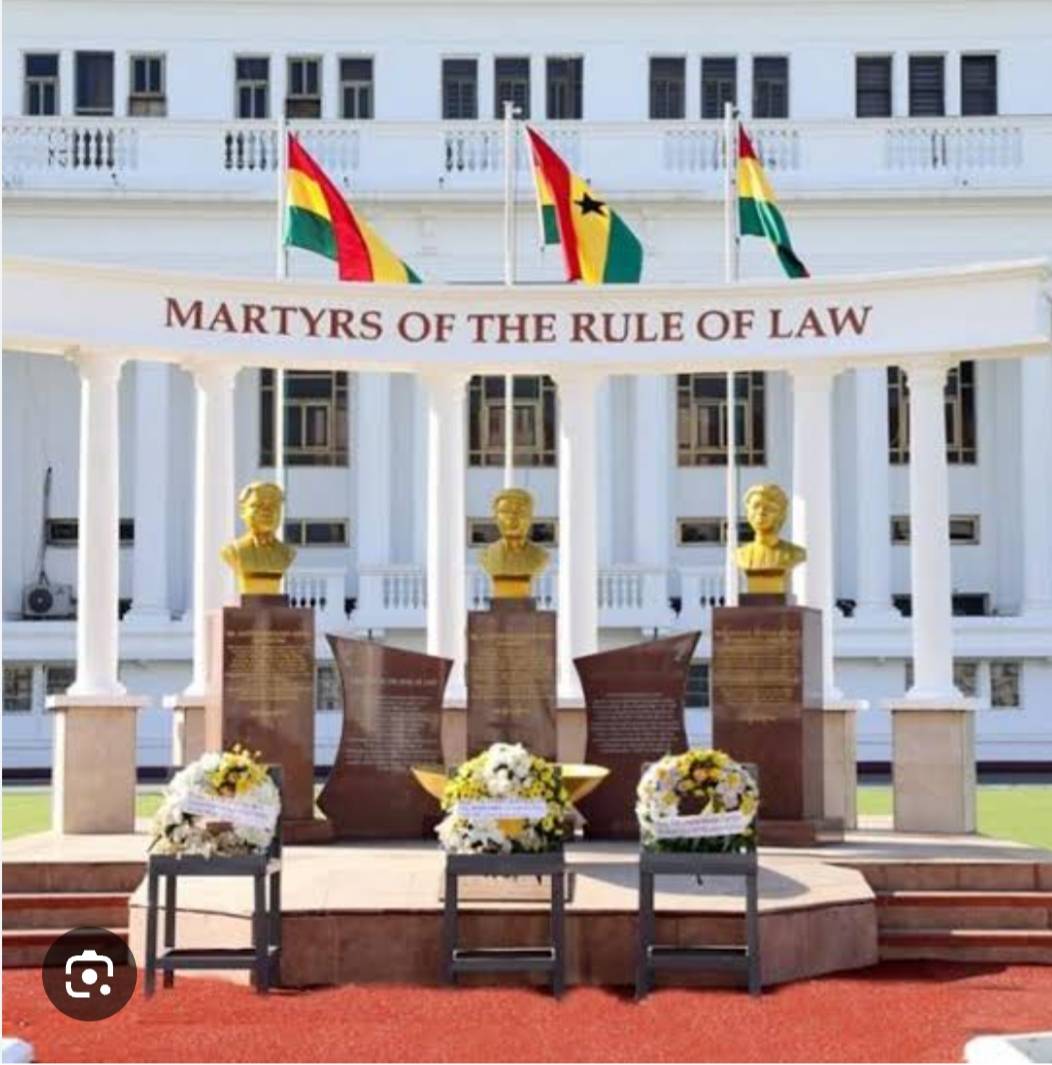
law and government in Ghana

1. Introduction
-
Briefly introduce Ghana as a democratic country in West Africa.
-
Mention its political system and the importance of law and government in maintaining order and stability.
2. Overview of Ghana's Political System
-
Ghana is a democratic republic with a multi-party system.
-
The country operates under the Constitution of 1992, which serves as the supreme law.
-
The government is divided into three branches:
-
Executive (headed by the President)
-
Legislative (Parliament)
-
Judicial (Courts)
-
3. The Constitution of Ghana
-
The Constitution is the foundational document of Ghana’s legal framework.
-
It outlines the separation of powers, fundamental human rights, and duties of the government.
-
The Constitution also emphasizes the rule of law, meaning laws are applied equally to everyone, including government officials.
4. The Executive Branch
-
The President is both the head of state and government.
-
The President is elected for a four-year term, with the possibility of re-election for one additional term.
-
The President appoints a Vice President and Ministers of State, including those in charge of various sectors like finance, education, and health.
5. The Legislative Branch
-
Parliament consists of a unicameral system, meaning there is only one house: the National Assembly.
-
It has 275 members who are elected every four years.
-
Parliament’s main function is to pass laws, approve the budget, and oversee the executive branch.
6. The Judicial Branch
-
Ghana's judiciary is independent and plays a crucial role in interpreting the laws and ensuring justice.
-
The Supreme Court is the highest court, and it has the power of judicial review.
-
Other courts include the Court of Appeal, High Courts, and Circuit Courts, which handle various types of cases.
7. Law Enforcement and the Police
-
The Ghana Police Service is responsible for maintaining law and order.
-
Ghana has laws relating to crime, public safety, and national security, and the police enforce these laws.
-
The Judicial Service also oversees the functioning of the courts to ensure laws are fairly applied.
8. Human Rights and Rule of Law
-
Ghana has made significant progress in upholding human rights.
-
The Constitution guarantees fundamental human rights such as the right to freedom of speech, freedom of assembly, and protection from arbitrary arrest.
-
However, challenges such as corruption and the enforcement of some laws persist.
9. Challenges Facing the Legal and Government Systems
-
Corruption within the government and legal system.
-
Judicial delays, where cases take long to be resolved.
-
Access to justice, particularly in rural areas, can be limited.
10. Conclusion
-
Summarize the strength of Ghana's legal framework and democratic governance.
-
Acknowledge areas for improvement and the ongoing efforts to strengthen the rule of law and human rights.
No comments yet
Be the first to share your thoughts!